“NOW FOR SOMETHING COMPLETELY DIFFERENT”
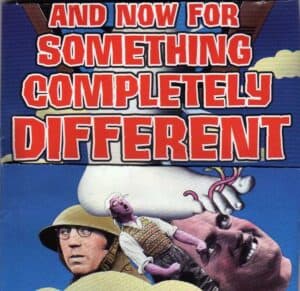
Many of you may remember this line from the opening of “Monty Python’s Flying Circus” from way back when. That’s also a good introduction to this piece today. Many years ago, I acquired a book titled “Dictionary of Word Origins” by John Ayto. It’s almost 600 pages of information about how more than 8,000 English words originated. It’s fascinating, though often a bit boring, reading. It occasionally reveals some fascinating facts about both languages and the people who speak them. From time to time, like now, I’ll try to share some of these insights on these pages.
“Acre” is an ancient word that appears to be the source of words such as “agent” and “act,” whose base meaning concerns “do” and “drive.” In addition to their connections to other ancient languages, such words pertain to agriculture, once farming had moved from herding animals to cultivating fields or enclosed areas. Eventually, the word came to refer to an area of land that a pair of oxen could plow in one day. This was the first measurement, and thus the meaning, of the term “acre,” rough though it be. Later on, such measurements came to be determined by pacing off the areas. Thus, so many “paces” came to define and determine the area and term “acre.”
Here’s another example. “Advertise” originally derives from the Latin “turn towards” or “adverse,” meaning “to turn away.” Eventually, the word came to mean“warning” or “giving notice.” This led to the modern meaning of “being against” or “ignored.” The modern sense of the term, “to describe publicly so as to increase sales,” did not appear until the mid-18th century, as in “advertisement.” Funny how meanings often seem to reverse themselves.
I’ll try to include such linguistic “bon mot” examples in future editions. Obviously not as much fun as Monty Python’s, but perhaps enjoyable and educational in some sense. : O)